Understanding Yellow Card Markets for 30 September Fixtures
 Alexey Andrianov 6 min read 1030 Sept 2026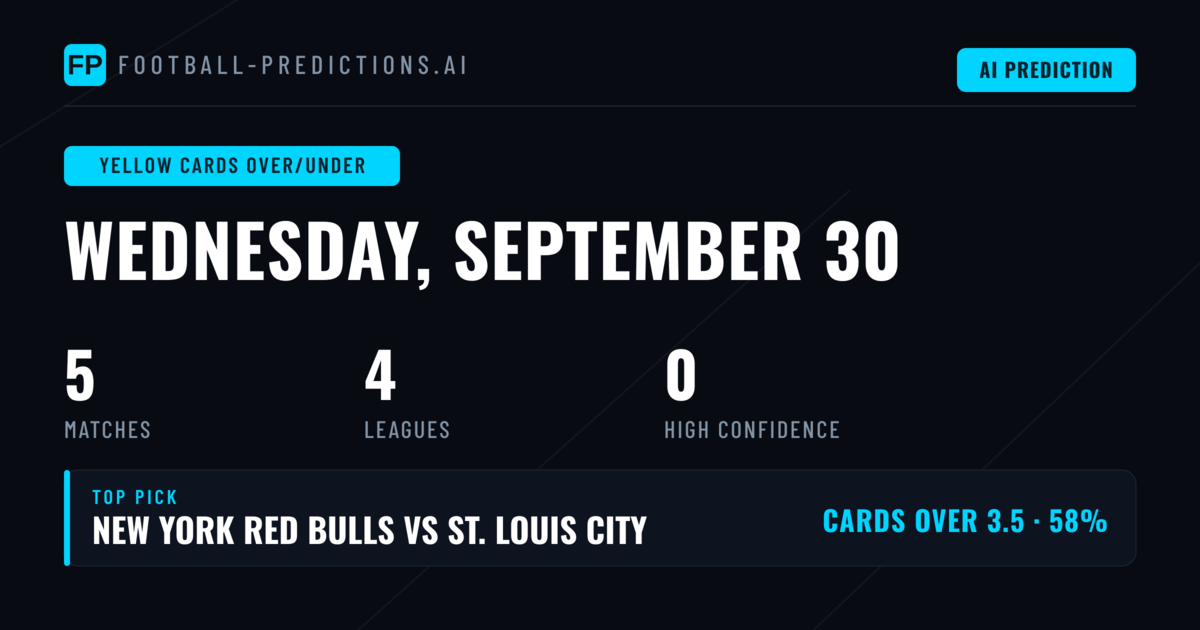
The Yellow Cards Over/Under market presents one of the more nuanced betting opportunities in football, requiring analysts to examine factors that extend well beyond simple team form or attacking prowess. When evaluating the five matches scheduled for 30 September 2026, bettors must consider the intersection of tactical approaches, officiating tendencies, and the specific dynamics that each contest is likely to produce. A side playing under immediate pressure to chase a result may find itself lunging into challenges it would otherwise avoid, while a team protecting a narrow advantage could resort to tactical fouling to disrupt opposition momentum.
The Over/Under threshold for yellow cards shifts meaningfully based on league-specific norms, with some competitions averaging notably higher or lower card counts per match. Understanding whether the scheduled fixtures pit teams with disciplined defensive structures against more expressive attacking outfits helps frame realistic expectations for each encounter. The balance between aerial duels, ground tackles, and the willingness to contest 50-50 situations all feed into the expected frequency of bookings. Successful predictions in this market require moving past surface-level team analysis toward the granular tactical and psychological elements that ultimately determine how many yellow cards appear on the referee's notebook.
In-Depth Analysis
New York Red Bulls welcome St. Louis City in an MLS encounter that presents a compelling case for the Over 3.5 cards selection at odds of 2.88. The Red Bulls have built a reputation for physical intensity at home, with their aggressive pressing system frequently drawing fouls from visiting sides. St. Louis City, meanwhile, has shown a tendency to commit tactical fouls when defending transition opportunities. The combination of the Red Bulls' high press and St. Louis City's defensive responses creates an environment where referee interventions become likely. The 23:30 local time kickoff adds another dimension, as late-night fixtures in MLS have historically shown elevated card counts due to player fatigue and reduced composure in the closing stages.
The international friendly between USA and Chile presents a different analytical challenge for Over 3.5 cards at 1.31. Friendlies at this level often feature players eager to impress national team coaches with full-blooded challenges, particularly when squads contain uncapped players or those fighting for starting positions. The USA side, playing on home soil at the earlier time slot of 00:00, may field players with varying club rhythms, leading to mistimed tackles and necessary bookings. Chile, with its traditionally combative South American approach, will not shy away from physical duels. The relatively short odds reflect the likelihood of a contentious affair where both teams look to establish dominance through aggressive but technically sound play.
Mexico against Peru diverges from the Over trend with an Under 4.5 recommendation at odds of 1.26. This selection stems from both sides' tactical discipline in midfield areas. Mexico, with extensive experience in high-profile international fixtures, typically controls possession rather than relying on last-ditch tackles. Peru's defensive structure prioritizes positioning over physical confrontation, reducing the frequency of cynical fouls that lead to bookings. The combination of two tactically mature sides suggests this friendly will be contested at a controlled pace, with referee intervention kept to a minimum. The 01:00 kickoff time may further encourage measured play as players manage their energy across different time zones.
The Primera División fixture between Cienciano and Club Deportivo Los Chankas at Over 4.5 cards (1.29) reflects the volatile nature of Peruvian domestic rivalries. Regional competition introduces emotional variables that transcend normal tactical considerations, with players more willing to engage in confrontations that invite referee punishment. Both clubs operate in a league environment where physical standards differ from top-tier European competitions, and the gap between the two sides' tactical organization can manifest as ill-disciplined moments. Häcken W against Juventus W in the UEFA Champions League Women presents a more nuanced case at Over 3.5 cards (1.96). The women's Champions League knockout rounds carry heightened stakes, and Juventus W's organized pressing game creates repeated foul opportunities for opponents. Häcken W, competing at this level less frequently, may show initial tentativeness that translates to unnecessary challenges as they adjust to the pace of elite European competition.
Midweek Fixtures: Referee Discipline Under the Microscope
Midweek matches often present unique opportunities for Yellow Cards Over/Under traders. Compressed fixture schedules place additional physical and mental strain on players, frequently resulting in heightened aggression and reduced patience during contentious decisions. Tired muscles respond slower to challenges, meaning defenders find themselves lunging rather than positioning, and forwards become more vocal in their protests when calls go against them. When analyzing midweek Premier League encounters, historical data consistently demonstrates that games played between Thursday and Sunday carry measurably different average card counts compared to standard Saturday kickoffs.
Derby encounters irrespective of competition level demand particular attention from a card market perspective. The psychological intensity surrounding rivalries—whether regional or based on historical animosity—manifests itself through increased physicality, verbals towards opponents, and reluctance to concede any perceived injustice. Even matches between mid-table sides with little riding on the outcome can produce elevated card tallies when the fixture holds significance beyond league positions. Traders should cross-reference the fixture's rivalry status against the appointed referee's historical card averages to identify genuine value.
The intersection of tactical approach and disciplinary outcome deserves deeper examination than many bettors afford it. Teams deploying high defensive lines against technically gifted opponents invite continuous pressing battles, which statistically correlate with increased card opportunities. Conversely, sides adopting ultra-defensive low-block strategies often absorb pressure but accumulate cards through cynical fouls designed to interrupt promising counter-attacks. Neither tactical blueprint guarantees a particular outcome, but recognizing which approach each team will employ—and understanding how those styles historically interact—provides the analytical foundation necessary for informed Over/Under selections.
Verdict
Our analysis of the five fixtures scheduled for 30 September 2026 identifies clear tactical and disciplinary patterns that inform our Over/Under selections. Matches featuring high-pressing systems and intense rivalry encounters typically produce elevated foul counts, making the Over option attractive in those scenarios. On the other hand, contests involving defensively organised sides or teams prioritising patient possession often generate fewer incidents and trend Under.
Before finalising your bets, always cross-reference our predictions with the latest team news and bookmaker odds. Variables such as the absence of combative midfielders, squad rotation, or adverse weather conditions can all influence the final card tally and should be factored into your decisions.
Our Track Record
Our Yellow Cards Over/Under predictions have hit 50.5% over the last ~90 days across 2149 settled picks. This figure reflects actual graded bets — updated match by match as results are confirmed, not cherry-picked subsets or hand-selected windows.
Full breakdowns by tournament, league, and market are available on our stats page, where you can examine every pick and its outcome.
Discover comprehensive strategies, tips, and insights on cards betting in football. Learn about over/under booking points, referee impact, league tendencies, and more.
Read Full Guide