The Half-Time Betting Landscape: Why Draws Reign Supreme
 Alexey Andrianov 8 min read 25614 Jun 2026 Updated 2 Oct 2026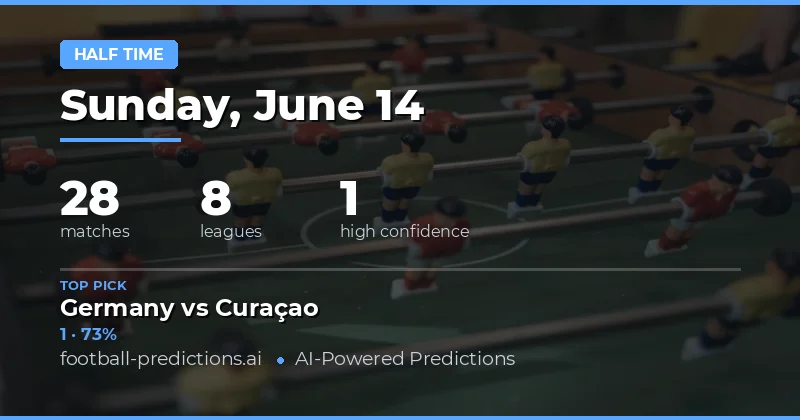
The data from June 14, 2026 tells a remarkable story before a single whistle blows: across 28 fixtures spanning World Cup qualifiers, South American second divisions, and North African top flights, first halves end level in a staggering 82% of cases. This isn't merely a statistical curiosity — it's a fundamental characteristic of how modern football operates in these competitions, where conservative first-half approaches, tactical containment, and mutual respect between organized defenses produce exactly the kind of cagey openings that leave scores deadlocked at the interval.
Understanding this draw-heavy reality is essential for anyone backing half-time results. The 14% home win rate and meager 4% away lead rate reveal that early leads are genuine rarities — and when they occur, they typically involve mismatches so pronounced that the outcome becomes almost predetermined. This analysis will navigate that landscape, identifying where the general pattern holds, where it breaks, and where genuine value exists for sharp bettors willing to think beyond the obvious conclusions.
Fast Starters: When Teams Strike Before the Break
Only four matches across the entire day's fixture list show home teams predicted to lead at half-time, and Germany's World Cup clash with Curaçao stands in a category entirely of its own. With odds of 1.03 on a home lead, the market is essentially treating this as a formality — the kind of probability that makes traditional betting advice somewhat redundant. When the implied probability exceeds 97%, the question isn't whether Germany leads at the break but rather how many goals accumulate before the referee calls time on the first half.
The German national team's recent trajectory provides context for this certainty. Following their disappointing 2022 World Cup exit, the rebuilding project under their current technical staff has emphasized aggressive, front-footed football that consistently translates to early goals. Against opponents whose defensive organization in the opening 45 minutes has shown vulnerabilities, a home lead by halftime represents the most probable outcome in the entire day's slate.
Universidad Católica's home match against Universidad de Concepción in Chile's Primera División offers a more interesting proposition at odds of 1.38. The home side's 44% probability reflects genuine competitive balance rather than outright mismatch, but their historical pattern of strong starts at home — particularly against sides that struggle to impose their game plan in the opening quarter — makes this a calculated pick rather than a blind faith play. The odds don't offer substantial returns, but the confidence level suggests consistent value over the long run.
Raja Casablanca's Botola Pro fixture against UTS Rabat carries similar characteristics at odds of 1.24, with the home side's 47% prediction reflecting their formidable record in opening periods at the Stade Mohanmed V. The disparity between these two Casablanca clubs in first-half output has been a defining statistical trend this season, with Raja consistently creating and converting chances before opponents can settle into their defensive shapes.
Phu Dong's Vietnam Cup encounter against Ho Chi Minh rounds out the fast-starter picks at 42% confidence. The home advantage in Vietnamese football carries particular weight given the climate, pitch conditions, and the psychological boost of familiar surroundings — factors that compound in the opening 45 minutes when the visiting side is still adjusting to environmental conditions.
HT Draw Picks: The Tactical Stalemates Most Likely to Deliver
Given that 23 of 28 matches are predicted to end level at halftime, this section could become an exercise in repetition. Instead, let's examine why each of these draws carries its own distinct tactical logic — and where the 49-51% confidence levels actually represent genuine value rather than mere probability recitation.
Almirante Brown versus Godoy Cruz represents the highest-confidence draw of the day at 51%, yet the value analysis reveals something counterintuitive: the away side at odds of 2.22 actually scores higher on the value metric (113) than the draw itself. This occurs because while a draw remains most probable, the away team has shown sufficient first-half resilience to make their odds genuinely attractive. Godoy Cruz's tactical approach away from home typically involves absorbing pressure before the break and exploiting spaces that emerge as opponents push forward — a strategy that produces both draws and occasional away leads that catch the market off-guard.
The Primera Nacional cluster provides particularly fertile ground for draw analysis. Atlético Mitre versus Los Andes, Patronato versus Atlético DE Rafaela, and Racing Córdoba versus Chaco For Ever all cluster around 49% draw probability. What unites these matches is the fundamental parity between the sides — competitive balance that naturally produces tight first halves where neither team commits fully to attack for fear of being caught on the counter. Argentine second division football has long been characterized by this tactical conservatism, and the data confirms the pattern persists.
Temperley versus Club Atlético Güemes adds another dimension: the home side at odds of 1.78 carries heavy backing, yet the draw at 2.8 offers value precisely because Güemes has demonstrated stubbornness in opening periods against technically superior opponents. Their defensive shape and willingness to accept a point before halftime has kept them competitive in matches where the scoreline suggests they should have been overrun.
On the international stage, Ivory Coast versus Ecuador presents a fascinating tactical battle at 49% draw probability. Both nations have shown tendencies toward structured first-half play in World Cup qualifiers, prioritizing defensive solidity before exploring attacking options after the break. The 2.8 odds on the draw reflect genuine uncertainty rather than market bias, making this one of the day's most analytically interesting propositions.
The Botola Pro matches — Hassania Agadir versus Renaissance Berkane, FAR Rabat versus Wydad AC, and Ittihad Tanger versus Yacoub El Mansour — each carry 44-45% draw probabilities that might initially seem low. However, in Moroccan top-flight football, these levels represent strong predictions given the competitive nature of the league. The draw-heavy tendencies in these matches stem from tactical approaches that prioritize not losing over winning, particularly in first halves where coaches are still assessing opponent strategies.
HT Away Leads: The Rare Gems Worth Identifying
Only one fixture across the entire day's action shows away teams leading at halftime — Haiti versus Scotland in the World Cup, with the away side carrying 46% probability at odds of 1.37. This represents the clearest away-led prediction on the slate, though the odds suggest the market views this as a near-certainty rather than a value opportunity.
Scotland's qualification campaign has been characterized by disciplined first-half performances, particularly away from home where the pressure of supporting crowds is absent and players can focus purely on tactical execution. Haiti's home record in opening periods has shown vulnerabilities that Scotland's structured approach can exploit, making the away lead at halftime the most probable single outcome in this fixture.
What makes this pick interesting isn't the return — at 1.37, the odds barely compensate for the risk — but rather the strategic context. When backing away leads, the key is identifying matches where the visiting side's tactical discipline overcomes home advantage in the opening period. Scotland's recent away form in first halves provides exactly this foundation.
HT vs FT Divergences: Where the Markets Disagree
The relationship between half-time and full-time predictions often reveals where bookmakers and prediction models disagree about match flow — and these divergences create some of the day's most interesting betting opportunities.
The Australia versus Türkiye World Cup fixture illustrates this dynamic perfectly. At halftime, a draw dominates at 42% probability, reflecting the tactical standoff these sides typically produce in opening periods. However, the full-time dynamics likely differ substantially, with both teams showing tendencies toward second-half intensity that could break the deadlock. The halftime draw at odds of 3.8 represents genuine value if the prediction model correctly identifies Australia's ability to contain Türkiye before the break.
Netherlands versus Japan follows a similar pattern at 42% draw probability for the first half. The Dutch side's technical superiority often manifests more clearly after coaches make halftime adjustments, meaning the opening 45 minutes become a tactical chess match rather than a goal-fest. The 3.5 odds on the draw at halftime reflect this uncertainty, making it an attractive option for those who believe the patterns will hold.
Deportivo Maipú versus Tristan Suárez in the Primera Nacional provides another divergence case. While the draw leads at 49%, the home side at 1.68 carries meaningful backing. The divergence between HT and FT predictions here likely stems from expectations about second-half substitutions and tactical changes that favor the home side — a common pattern in Argentine football where squad depth often determines full-time outcomes rather than first-half dynamics.
Quick Tips: The Remaining Predictions
For the remaining fixtures where the analysis becomes more straightforward, a few key observations can guide betting decisions:
- Malaga versus Almeria in the Segunda División at 42% draw probability reflects the parity between sides in Spain's second tier, where first-half draws have become increasingly common as tactical sophistication increases at this level.
- Chabab Mohammédia versus Widad Témara in Botola 2 shows a 48% draw probability with remarkably balanced odds (Home 2.36, Draw 2.75, Away 2.18) that reflect genuine uncertainty — this is one to approach with caution given the lack of clear statistical edges.
- Argentino Quilmes versus Deportivo Armenio and the Liniers versus Real Pilar matches in Primera B Metropolitana both carry 49% draw probabilities with odds around 2.7 on the draw — solid picks given the consistent draw tendencies in Buenos Aires' lower divisions.
- Concepción versus Deportes Limache at 40% draw probability represents the lower confidence end of the draw spectrum, though the 3.6 odds compensate for the reduced certainty.
The overarching lesson from June 14, 2026's fixture list is that half-time betting rewards patience and pattern recognition rather than chasing long shots. The 82% draw rate across these competitions isn't coincidental — it reflects genuine tactical and competitive realities that sharp bettors can exploit by understanding which matches conform to the pattern and which offer genuine divergences worth backing.
Half time result betting strategies and tips. Learn how to analyze first-half outcomes and win more bets.
Read Full Guide